
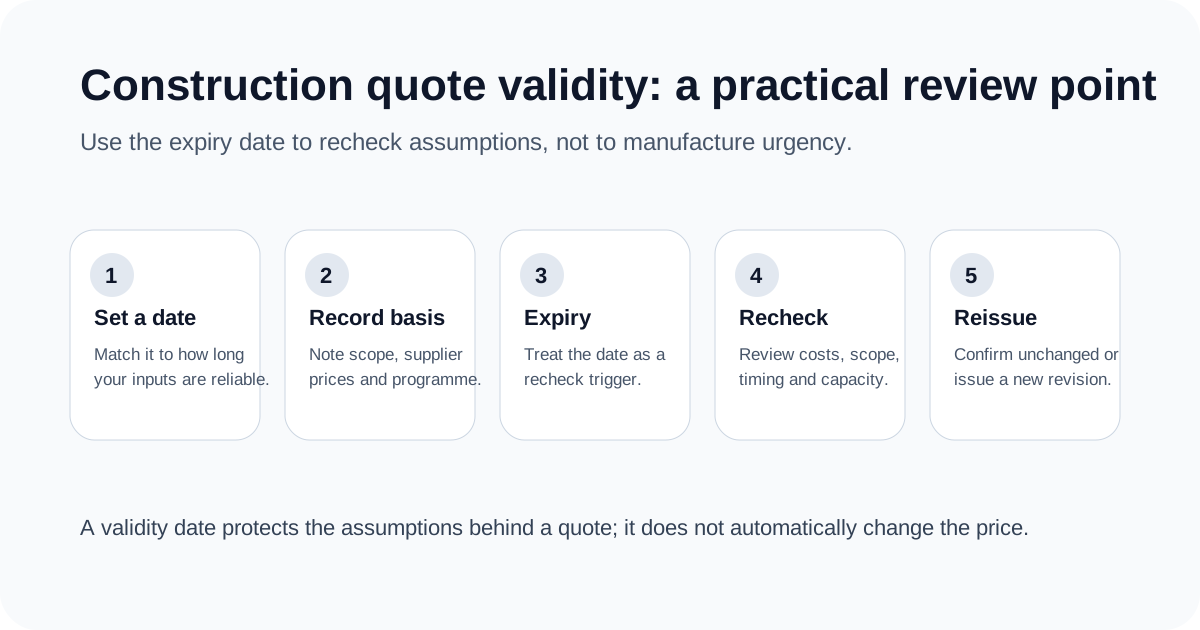
Start with what a validity period actually means
A validity date tells the customer how long the contractor is prepared to keep the quotation open on its stated basis. It is useful because construction prices depend on inputs that can move: supplier quotations expire, labour capacity changes, subcontractors revise offers and the proposed start date can shift.
The date should not be treated as a promise that every input will remain unchanged until midnight on the final day. The quote still needs clear assumptions and terms. Equally, expiry should not be used as a reason to invent a price increase. It is a point to recheck whether the original commercial basis still holds.
Choose the period from the least stable important input
Instead of starting with a standard number of days, look at the inputs that could materially affect the price or delivery commitment. If a major supplier price is only held for a limited period, or a subcontract package depends on a dated offer, the customer-facing validity should not imply more certainty than those inputs support.
- Supplier and subcontractor quotation validity.
- Expected movement in volatile or imported materials.
- Labour and specialist availability for the proposed programme.
- How complete the drawings, quantities and specification are.
- Whether access, permits or third-party decisions could move the start date.
Record the pricing basis when the quote is issued
An expiry date is much easier to manage when the estimate records what supported the price. Keep supplier references, subcontractor offers, wage or labour rates, programme assumptions, drawing revisions and important exclusions with the estimate. That creates a clear checklist when the customer returns later.
For the customer, the quote should make important assumptions visible without turning the document into an internal cost sheet. If the price depends on a particular specification, access arrangement or start window, state it clearly enough that a later change can be identified.
When a quote expires, recheck before you reissue it
If the customer accepts after the stated validity period, do not automatically increase the total and do not automatically honour the old figure without review. Recheck the inputs that could have changed. The correct outcome may be that nothing material has moved and the quote can be reissued on the same commercial basis.
If something has changed, issue a new revision and make the changed assumption understandable. That is cleaner than silently editing the old document because it preserves the history of what the customer originally received.
- Confirm the scope and latest drawings are still the same.
- Refresh material and subcontractor prices that matter to the total.
- Check the proposed programme and labour availability.
- Review allowances, exclusions and provisional information.
- Date and identify the revised quotation clearly.
Separate customer delay from genuine price movement
A delayed decision does not by itself prove that the price must change. The commercial question is whether the inputs or scope have changed enough to require a new figure. Keeping that distinction clear makes the conversation easier: you can explain the specific item that moved rather than presenting expiry as a penalty.
The same principle applies when the customer asks for extra work during the decision period. A scope change should be priced and documented as a change, not hidden inside a generic validity adjustment. See our guide to construction variation quotes for a structured approach.
Use the validity date in follow-up without creating false urgency
It is reasonable to remind a customer that a quote is approaching its review date when the date reflects real pricing or programme assumptions. The message should explain what the date means: after that point you may need to recheck costs or availability before confirming the work.
Avoid countdown language that implies the price will definitely disappear or rise when you have no basis for that claim. Useful follow-up helps the customer understand the next step. Our construction quote follow-up guide covers that wider process.